
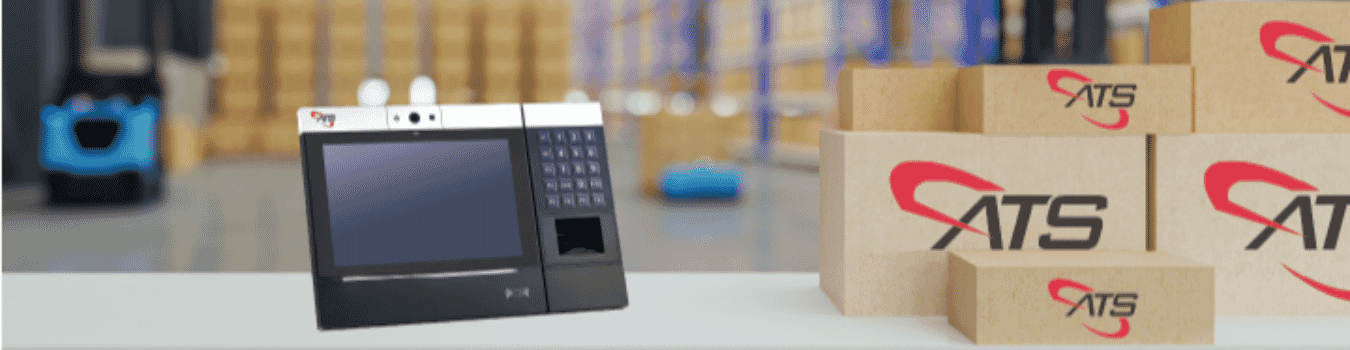
Facial recognition vs Time cards
Moving from a time clock that uses paper time cards to a cloud-based time clock is a big jump, however the opportunity to upgrade while also adding facial recognition technology to your offering is a big win for any company.
Examining the differences between facial recognition time clocks and time clocks that use time cards reveals not only a superior time and attendance experience for employees, but an automated dream for payroll managers.
In this article, we detail the advantages of facial recognition technology and share some of the features to look for in a facial recognition time clock that are worth highlighting and reselling to your prospects and customers.
Modernizing Time Clock Terminals Beyond the Time Card Machine and Card Readers
The first step to modernizing an employee time tracking system is to automate as much of the process as possible, from collecting workflows to delivering attendance data to payroll. Fortunately, companies that are ready to make the leap from a time card machine to automated attendance systems are doing so at a time when biometric technology is lifting automated time tracking past older swipe and proximity card readers.
Biometrics and facial recognition are more prevalent in people’s lives. They use it to unlock phones, safes, and computers. Bringing face recognition to the time clock is a logical and natural innovation.
Reselling time clocks that use facial recognition software puts you on the leading edge of attendance management technology. Having a face recognition and time attendance system as part of your offerings broadens your market both for high value, enterprise prospects and SMB prospects still toiling away with mechanical punch cards. It also helps you retain and grow accounts with existing customers looking for an upgrade to their time tracking system.
A Face Recognition Time Clock Offers a Better Employee Experience
Both employers and employees appreciate speed at the time clock. Nobody wants workers having to gather around a slow time clock, waiting for their turn. Long lines at shift change means it takes longer for employees clocking in to reach peak productivity. Those long lines also mean extra time added to the hours worked for the employees clocking out and eager to get home.
A facial recognition time clock provides a faster experience than other options since employees don’t have to mess with physical time cards that are easily lost or damaged. With a biometric reader, the employee always has everything they need to clock in or out.
The facial recognition reader can also create a safer experience due to how much it reduces the need for an employee to touch the time clock. In contrast, card readers and other biometric options, like fingerprint time clocks, always require some hands on moment at the time clock.
Not having to touch the time clock does also speed up the transaction time, but its more impactful advantage comes from reducing the risk of the time clock as a transmission source of illness among employees.
Face Recognition Time Clock Features to Maximize Employee Experience
As you explore the facial recognition time clock options available, keep in mind a number of key features that can make or break the facial recognition experience.
- Processing power and memory: The facial recognition authentication process at the clock only take seconds.
- Scope of facial data points collected: The more data points the facial recognition software collects, the less risk there is of false positives or negatives. A software that captures and stores multiple employee biometric templates during the enrollment process and into the facial recognition system improves the accuracy of the authentication process when the employee clocks in and out.
- Automated assistance for employees: Where a person stands in front of a facial recognition time clock is critical to allow the facial recognition system to perform optimally. Facial recognition software will provide clear, visual guidance to employees at the clock, so they can be sure they’re standing in the optimum position for fast, accurate authentication.
- Presence sensor: A presence sensor that can automatically wake up the time clock when an employee is in proximity can speed up the authentication process, letting employees move through the time clock line even faster.
Companies Run More Accurate Payroll with Face Recognition Time Attendance Collection
Labor costs are always a major line item in any company’s operating budget. The ability of an automated time tracking system to capture actual work time more accurately – without requiring manual intervention – is the driver that saves companies considerable money on their payroll.
Mechanical time cards are a step up from manual time tracking as written time reports are messy, fragile, easily fudged or lost, and time-consuming to enter into a payroll worksheet. However, the relevant comparison today isn’t between manual reporting and mechanical time cards, but between time clocks that use time cards and Cloud-based time clocks.
In truth, time cards only minimally reduce the amount of manual effort hours needed to produce a complete, accurate report of hours worked over handwritten time tracking. The time card punches have to be manually entered into an electronic timesheet and then reviewed for anomalies by the manager or payroll staff. They then have to spend time resolving any anomalies found. Both processes are subject to human error.
By comparison, a Cloud-based time clock requires no manual data entry. The best time clock and time tracking software can avoid or handle most exceptions without requiring human intervention.
Using swipe and proximity cards are an improvement over time cards since data collected is automatically delivered to the payroll system. Yet as physical cards, they are also vulnerable to getting lost, damaged, or forgotten. Every time this happens, even for a single punch, it requires someone to expend manual effort to clean it up. Within the world of Cloud-enabled time clocks, biometric reader technology reduces the amount of manual effort required to review and reconcile tracked time for an accurate payroll compared to any other time clock card reader options.
Face Recognition Time Clock Best Option for Reducing Time Theft
Time theft happens any time an employee finds a way to pad their attendance hours with time not actually worked. Buddy punching is one of the more popular and costliest forms of time theft and is unnervingly easy to do with any sort of physical card.
Employees can share their physical time cards, whether used with a time machine or software-enabled time clock. Any employee can punch in or out for a buddy without having to make physical contact with the other employee to get hold of their time card. While cards and badges used with a time clock makes buddy punching slightly more difficult, it persists as a relatively easy way for employees to pad work hours.
In contrast, a facial recognition time clock requires the employee to be physically present in front of the time clock to complete a punch. This makes facial recognition authentication the best option for minimizing the chances employees can engage in buddy punching .
The result for your customers using a facial recognition system is a more accurate payroll, reducing how much they pay for time not worked.
Facial Recognition Time Clock Terminals Also Lower Administrative Costs
Improving payroll accuracy, including reducing the risk of overpaying for labor, is one way that facial recognition terminals stand out as a quantifiable cost-saver for companies. There are two other ways they provide significant savings:
Fully automated system requiring minimal manual effort: From reducing how often employees need to enter information into the time clock to delivering complete and accurate attendance data to your payroll system, face recognition time clocks are the first stop of a fully automated payroll solution.
- No manual data entry from time cards.
- Far less manual review and reconciliation effort needed to ensure data accuracy before uploading it to the payroll system.
Payroll administrative time and costs go down in proportion to how little manual effort is needed to run the payroll. No time clock reader option reduces the need for manual effort in the attendance data collection process more than facial recognition software at the time clock.
No card management program: Physical cards all come with additional overhead costs to purchase and manage them. Time cards are single use, which means they’re a considerable on-going cost. Swipe and proximity cards are sturdier, but they also get lost and damaged, and need to be replaced. Companies using time cards also incur these additional costs:
- Use of HR personnel time to distribute and retrieve cards from new and offboarding employees.
- Need an inventory management system to track the individual credentials given to each employee and how many remain available, plus someone from HR or payroll to manage the time card inventory system.
We recommend that companies always have a secondary punch method when using any biometric time tracking system, as more jurisdictions prohibit forcing employees to use a biometric system. Regardless of whether a specific location has this legal requirement, we recommend it as a best practice for positive employee relations. Our stride80 time clocks can include digital or physical keypads as an alternative, although your customer could always add a card reader to the facial recognition time clock as well.
You can learn more about how facial recognition technology works and other best practices here.
Face Recognition Terminals are Clear Winners over Time Card Machines
In the hierarchy from paper or electronic time cards to swipe cards to biometric readers, facial recognition time clocks are superior in every way. Helping customers and prospects transition away from time cards to facial recognition technology is easier than you think; this includes transitioning companies still using time card machines and looking at automating employee time tracking for the first time.
Offering prospects and customers a facial recognition terminal can also be highly profitable for your business , especially when you join with ATS as your resale partner. Schedule a call with one of our consultants today and we can take you through all the details of what our stride®80 time clock with Only|You™, ATS’ Facial Recognition System can do for you and your customers.
Leave A Comment
You must be logged in to post a comment.